
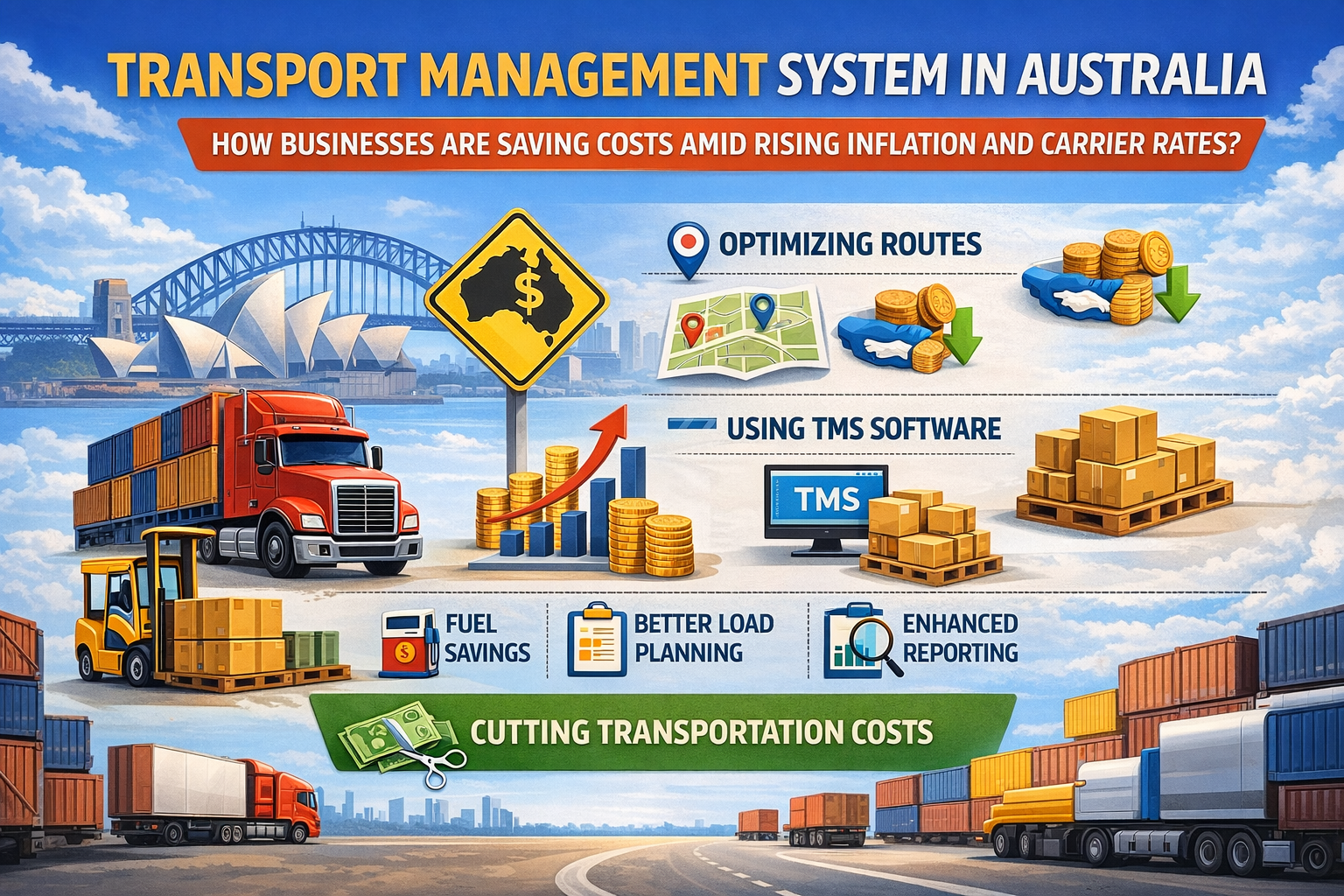
The bigger challenge sits quietly inside day-to-day operations. Manual processes such as constant phone calls, spreadsheets, delayed updates, and chasing documents keep logistics teams busy all day, yet rarely give them real control. Freight keeps moving, but clear visibility into what is happening, why delays occur, and where money is leaking often gets lost. Some businesses feel they have control of cost but in reality they are leaking money in freight.
This is why many businesses are re-evaluating their approach to transportation management. With products, like Xfrate, a transport management system in Australia is no longer a nice-to-have. It is becoming a critical foundation for cost control, visibility, and smarter freight decisions.
Why Freight Costs Are Harder to Control Than Ever in Australia?
Australia’s freight environment brings its own set of challenges. Vast distances between cities, regional capacity constraints, and a fragmented carrier landscape make consistency difficult to achieve. Add the complexity of mid-mile movements between ports, plants, distribution centres, and warehouses, and cost control becomes even more challenging.
In this context, negotiation alone no longer protects margins. Even well-negotiated rates can quickly fall apart when delays, detention, or miscommunication creep in. Without structured systems, costs don’t spike overnight. They rise quietly, shipment by shipment.
Where Most Shippers Lose Money Without Realising?
The biggest losses rarely come from headline freight rates. They come from everyday friction. Trucks waiting at docks, idle vehicles, late status updates, missing PODs, and billing mismatches that slow down payments.
Chasing drivers for updates or searching through emails for documents drains both time and money. Simply knowing where a truck is on a map does not explain why it is late or how much that delay is costing the business. Location alone is not visibility, and this gap is where margins slowly disappear.
The Shift From Freight Management to Freight Intelligence
This is where modern transport management software in Australia changes the game. Instead of treating freight as a series of disconnected movements, advanced systems turn every shipment into structured, usable data.
Data driven shipment allocation, Shipment status, performance metrics, and cost insights live in one place. This shift from manual coordination to freight intelligence transforms daily decision-making. Teams spend less time firefighting and more time planning with confidence.
Data That Changes Negotiation Power
When shippers understand cost and performance by route rather than relying on instinct, conversations change. High-leakage lanes become visible. Underperforming carriers are identified using facts, not frustration.
With this level of insight, Australian shippers can stabilise freight spend even as market rates continue to rise. This is where a capable transport management software provider in Australia delivers real value, not just through technology, but by enabling better and faster decisions.
Xfrate’s Smarter Approach to Transport Management Software in Australia
Xfrate brings a calmer, more connected way to manage freight in a complex Australian logistics landscape. Designed for real operational challenges, this transport management software in Australia helps shippers uncover hidden cost leaks while delivering tangible results, including up to 8% freight cost savings and a 30–40% reduction in manual logistics management effort thereby saving both time and possibility of errors.
By replacing fragmented communication with a unified platform, teams can manage orders, transporters, tracking, PODs, and performance from a single, reliable source of truth. As a trusted TMS platform, Xfrate helps businesses move away from constant firefighting and toward confident, data-led freight decisions, even as inflation and carrier rates remain unpredictable.
Conclusion:
Freight cost pressure in Australia is not a passing challenge. Fuel volatility and carrier constraints will continue to shape the market, but the real difference lies in how well operations are prepared to handle them. Businesses that rely on manual processes feel the strain, while those supported by the right systems gain control and clarity. Partnering with a reliable transport management software provider in Australia like Xfrate helps shippers move beyond firefighting and build a more stable, cost-efficient freight operation designed for long-term resilience.