
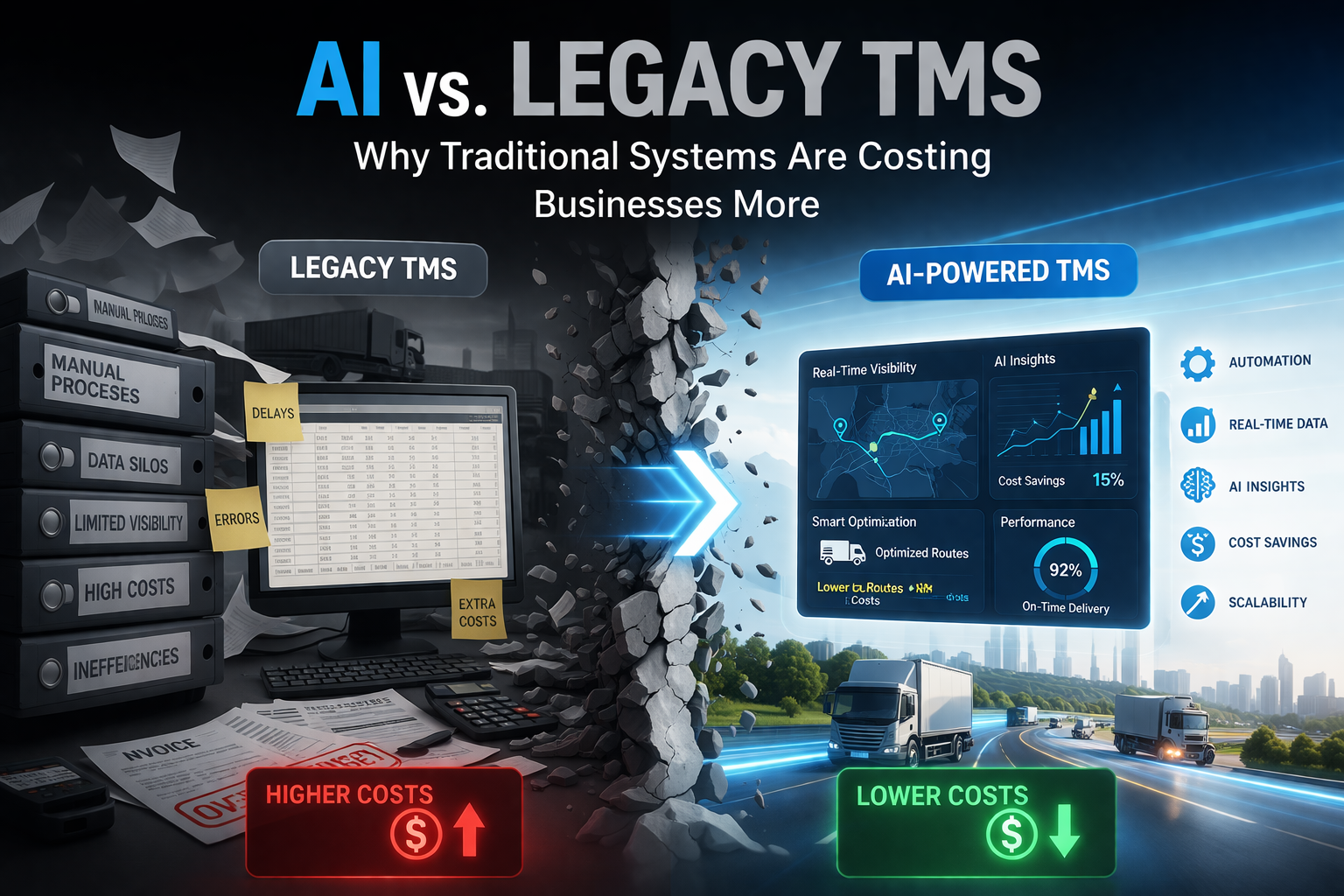
In today’s fast-moving logistics world, speed, visibility, and cost efficiency are no longer optional. They are essential for survival. Businesses are expected to make faster and better decisions, reduce costs, and deliver better customer experiences.
Yet many companies still rely on outdated systems built for a slower and simpler time. A legacy transport management system may seem functional on the surface, but in reality, it slows down operations and increases hidden costs. This challenge is especially visible in regions like Australia, where businesses using a transport management system in Australia are now facing growing pressure to modernize and scale efficiently.
At Xfrate, we see this challenge across logistics teams every day. The issue is not capability. The real problem is relying on systems that cannot keep up with modern supply chain needs.
What Is a Legacy TMS and How Does It Work?
A legacy TMS is primarily designed to store and organize data rather than support intelligent decision-making. It acts as a digital record system where information is manually entered and updated periodically.
In most cases, shipment tracking is managed through disconnected tools, and decisions are based on past data instead of live insights. This makes operations reactive. Teams often identify delays or disruptions only after they have already occurred.
Even today, many traditional transport management services follow this approach, which limits efficiency and slows down execution.
The Hidden Costs of Legacy TMS
Traditional systems may seem cost effective initially, but their inefficiencies gradually increase operational costs. Teams spend valuable time on manual tasks such as managing system entries, coordinating through calls, and correcting errors, which reduces productivity and creates unnecessary workload.
At the same time, limited visibility delays decision-making and weakens cost control. Businesses struggle to track performance accurately and often face billing or compliance issues. This is where modern data driven transport management system solutions help streamline operations and reduce inefficiencies. Similar challenges are seen in advanced markets like the US, where companies relying on a transport management system in the USA are shifting towards more intelligent and adaptive platforms.
AI-Powered TMS: A Smarter Approach to Logistics Management
AI-powered TMS platforms transform logistics from a reactive process into a data-driven operation. Instead of simply storing information, they analyse real-time and historical data to identify patterns, recommend decisions, and support faster, more accurate decisions.
Automation reduces manual effort by handling tasks such as order creation, carrier selection, load planning, and scheduling, improving both speed and accuracy. A centralised dashboard brings shipments, routes, and costs into one unified view, giving teams better control over operations.
In a competitive logistics environment, choosing the right TMS solution becomes critical, especially for enterprises looking for an enterprise TMS provider in Dubai to manage complex and large-scale logistics operations efficiently.
How Xfrate Solves the Cost Problem with AI?
Xfrate is designed to address the gaps in traditional systems by using AI to improve efficiency and reduce logistics costs. Its intelligent freight optimisation evaluates routes, carriers, and shipment data to identify the most cost-effective execution strategies.
AI-driven planning capabilities help improve capacity utilisation, while automated order management streamlines execution and minimises manual errors and delays.
With live tracking and end-to-end operational visibility on a single platform, businesses can monitor shipments, costs, and performance without relying on multiple tools. Streamlined workflows reduce manual effort and improve execution speed, enabling more consistent and efficient operations. With advanced transport management services, businesses can move from reactive processes to a more controlled and cost-efficient logistics approach.
When Should You Move from Traditional TMS to AI?
There are clear signs that indicate it is time to move away from a legacy system. If freight costs are increasing without a clear reason or teams rely heavily on manual coordination, the current system may be limiting performance.
Limited visibility, manual interventions, difficulty in scaling operations, and frequent delays are strong indicators that the system is no longer effective. Identifying these challenges early helps businesses reduce inefficiencies, avoid unnecessary losses, and transition to a more streamlined logistics approach.
Conclusion
Legacy systems were built for a time when supply chains were simpler and slower, but today they often create more problems than they solve by increasing hidden costs and limiting efficiency. Moving to an AI-powered transport management System is not just a technology upgrade; it is a strategic step towards smarter, faster, and more cost-efficient operations. With Xfrate, businesses can go beyond basic transportation management and start optimising every decision with intelligence and precision.
The real question is not whether to upgrade, but how long you can afford to rely on a system that delivers less and costs more.